
Sex Offender Checks in Hoke County
The North Carolina Sex Offender and Public Protection Registry is the primary public source for a Hoke County sex offender search. The North Carolina State Bureau of Investigation, or NCSBI, maintains that statewide system with registration data entered and checked by county sheriffs. It began in January 1996. The registry covers only people who have a legal duty to register, so an empty search result does not establish that a person has no criminal record or has never faced a sex-offense charge.
Choose the search method that fits the question. A name search helps when identity is known. An address search supports neighborhood awareness. Coordinates can check a location that does not map cleanly, while an exact Sex Registration Number helps distinguish similar names. The ordinary search is free and does not require an account. Compare the full name, aliases, photo, location, and registration details before concluding that a profile belongs to the intended person.
The official registry search screen shows how North Carolina presents these routes.
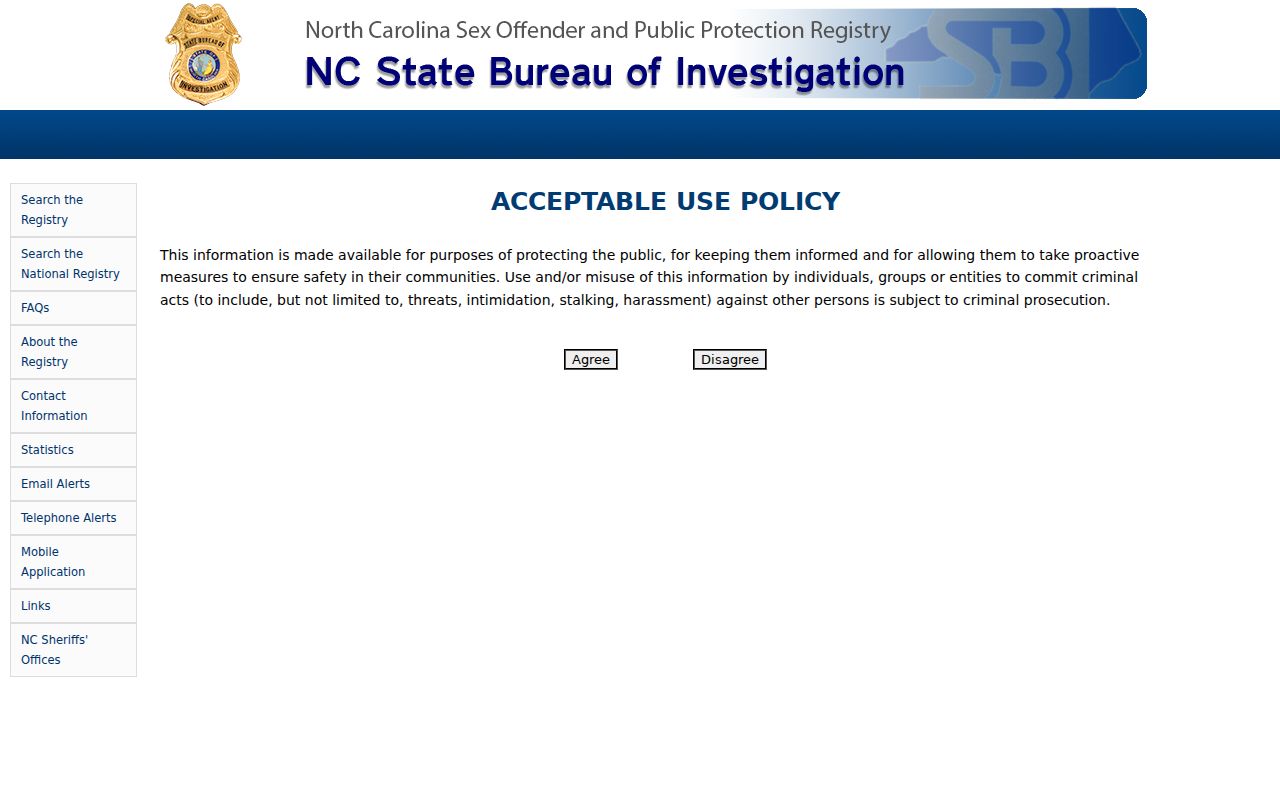
This interface is the correct starting point for current Hoke County registry records rather than a commercial people-search service.
Hoke County Registry Purpose
North Carolina publishes registry information for safety and public awareness. It is not a risk score. A listed person is not presumed likely to offend again merely because a profile remains public, and the registry does not include every person ever accused or convicted of a sexual offense. Statutory coverage, conviction type, jurisdiction, and registration status determine who appears.
The state’s registry history and purpose statement provides that context.
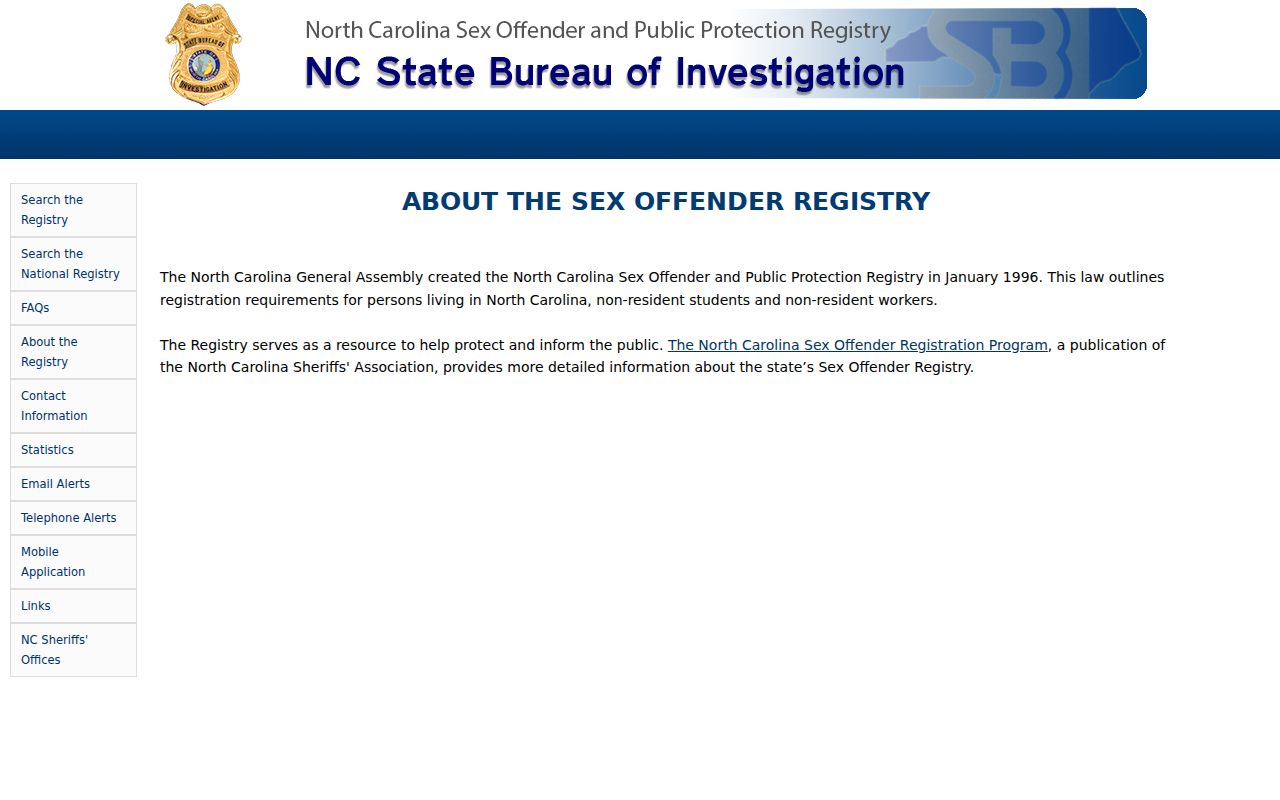
That purpose should guide each Hoke County search: use current facts for awareness, then verify any concern through the sheriff.
How to Search the North Carolina Sex Offender and Public Protection Registry
Start with the official NCSBI portal and select the route that uses the strongest facts available. Avoid broad assumptions from one field. A street search can reveal people registered near a place, while an identity search answers a different question.
- Open the official registry and review its terms and safety purpose.
- Choose name, address, coordinates, or Sex Registration Number. Add city or ZIP information when it helps narrow an identity.
- Review the result list, map, and public identifiers. Do not rely on a name alone.
- Open the full profile, note the registering county and status, and contact Hoke County Sheriff if a local fact seems wrong or out of date.
| Search route or field | Type | Required | Use |
|---|---|---|---|
| Offenders near an address | Address and map | Address | Checks an entered location using the live radius choices |
| Offender name | Text | Search identity | May be narrowed with city and ZIP |
| City or ZIP code | Text or selection | No | Focuses a geographic search |
| Latitude and longitude | Coordinates | Both coordinates | Alternative for a precise location |
| Sex Registration Number | Text | Exact number | Direct identifier search |
| Email alerts | Enrollment | Email and location | Sends notices offered for enrolled locations |
Live radius choices can change, so use those shown by the portal rather than assuming a fixed distance. For another state, use the national search described below.
Hoke County and National Searches
A Hoke County address search is best for awareness around a home, school route, park, or other local place. It relies on North Carolina data and its update process. The National Sex Offender Public Website, maintained by the U.S. Department of Justice, queries participating jurisdictions and is more useful when a search crosses state lines. Its coverage still depends on the records each jurisdiction makes available.
The official national search interface illustrates that broader layer.
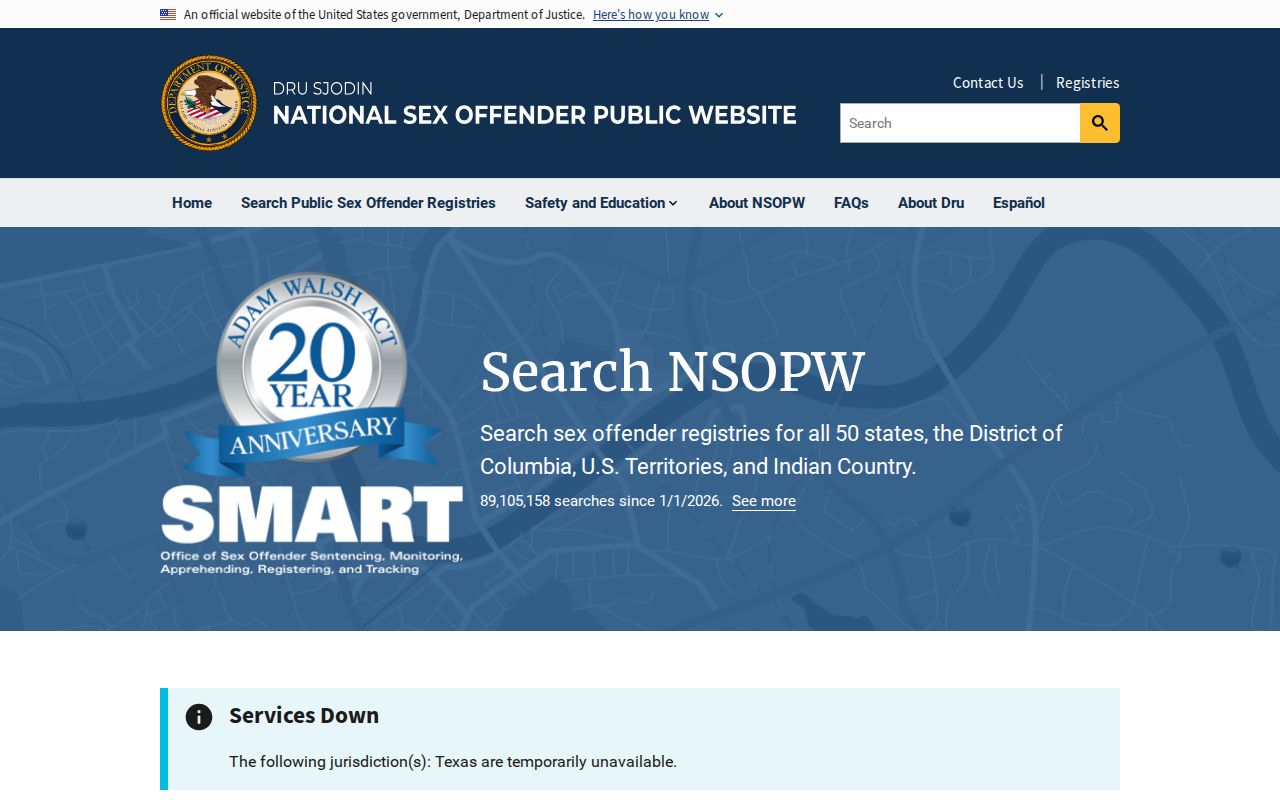
Use NSOPW to widen a search, but return to the North Carolina profile and Hoke County Sheriff for the most direct local verification.
Registry email alerts and VINELink also serve different purposes. Registry alerts concern changes tied to an enrolled location or registry record. VINELink concerns custody status notifications. Neither replaces a current registry profile or a direct report to the registrar.
Inside a Registry Profile
A public profile brings together identification, registration, location, and reportable-conviction information. Some data may shift after a move or sheriff verification. Victim identity is not public. Read every field in context and check the update status instead of saving an old screen as permanent proof.
| Name and aliases | Public identity names used to distinguish the registrant |
|---|---|
| Photo and descriptors | Image, physical description, and available identifying marks |
| Address or location | Registered location as entered and verified through the sheriff |
| Registration details | Registration number, current status, and registering county |
| Reportable offense | Conviction, jurisdiction, and conviction date made public by law |
| Other public fields | Vehicle or other statutory data when available; victim identity is withheld |
Note: A profile is a statutory public record, not a complete criminal-history file or a forecast of future behavior.
Hoke County Registry Office
The Hoke County Sheriff’s Office is the local registrar. Registration and time-sensitive changes are in-person legal duties. Call before visiting to confirm where staff want the registrant to report, whether an appointment is needed, and which documents are required. The sheriff verifies local information and sends it to NCSBI, which operates the public portal.
Hoke County Sheriff’s Office
429 E. Central Avenue
Raeford, NC 28376
910-875-5111
Monday through Friday, 8 a.m. to 5 p.m.
If a Hoke County address, status, or identity field appears inaccurate, give the sheriff the profile details and the specific fact at issue. The county’s official sheriff contact directory confirms the headquarters channel, and the Hoke County government site provides the department directory. Use 911 only for an emergency. NCSBI aggregates what sheriffs enter, so the county office is the practical first contact for a suspected local compliance problem.
North Carolina Registration Levels and Requirements
North Carolina does not use a generic public Tier I, Tier II, and Tier III scheme. Article 27A instead sets a 30-year Sex Offender and Public Protection Registration Program and lifetime categories for a recidivist, an aggravated offense, or a person judicially determined to be a sexually violent predator. The exact duty follows the statute and the case, not a shorthand tier label.
| Program or category | General duration | Key rule |
|---|---|---|
| Sex Offender and Public Protection Registration Program | 30 years | A petition to terminate may be possible after ten years if all statutory findings are met |
| Recidivist | Lifetime | Part 3 lifetime category |
| Aggravated offense | Lifetime | Depends on the statutory definition |
| Sexually violent predator | Lifetime | Requires the statutory court process and determination |
The current North Carolina registration law supplies the controlling definitions and duties.
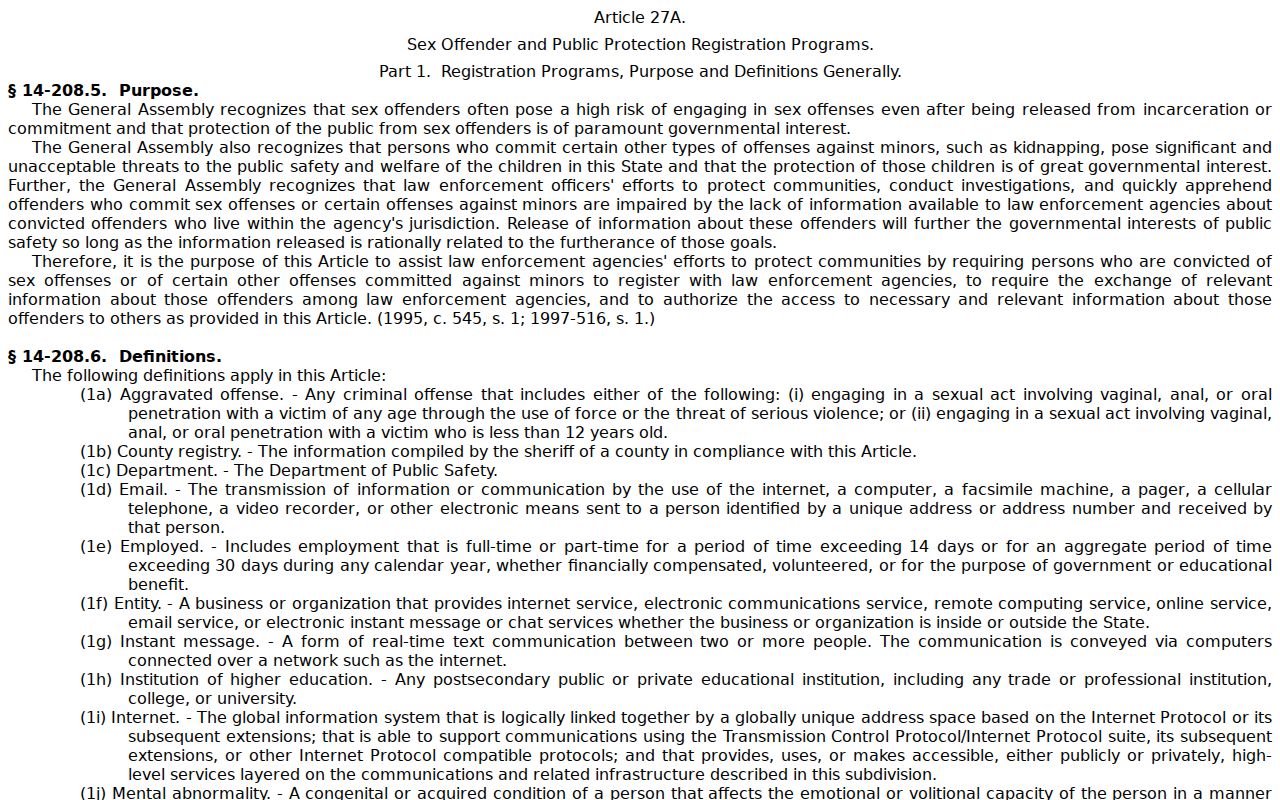
This law explains why a Hoke County profile must be read by program and category rather than translated into unofficial tier labels.
Hoke County Registry Limits
A ten-year mark does not remove a record by itself. Under G.S. 14-208.12A, an eligible petition is filed in the district of conviction for a North Carolina offense. The victim may be heard, and the court must make the required findings. Until a court grants relief and the systems process it, the registration duty continues.
Location restrictions also require care. G.S. 14-208.18 applies to certain covered registrants at premises mainly intended for minors and, for specified categories, within 300 feet of such a location when it sits on another place’s premises. It is not a universal Hoke County school-radius rule. Category, dates, facts, and the current statutory text all matter.
Reading Hoke County Registry Counts
NCSBI publishes county-by-county figures, but it labels them approximate. Processing delays, system errors, and pending status can affect the total. Requirements also differ, so the table does not represent every person with any sex-offense history. Use a count as a snapshot of registry administration, not as a complete crime measure or a way to judge one neighborhood.
The official registry statistics page states those limits alongside its county table.
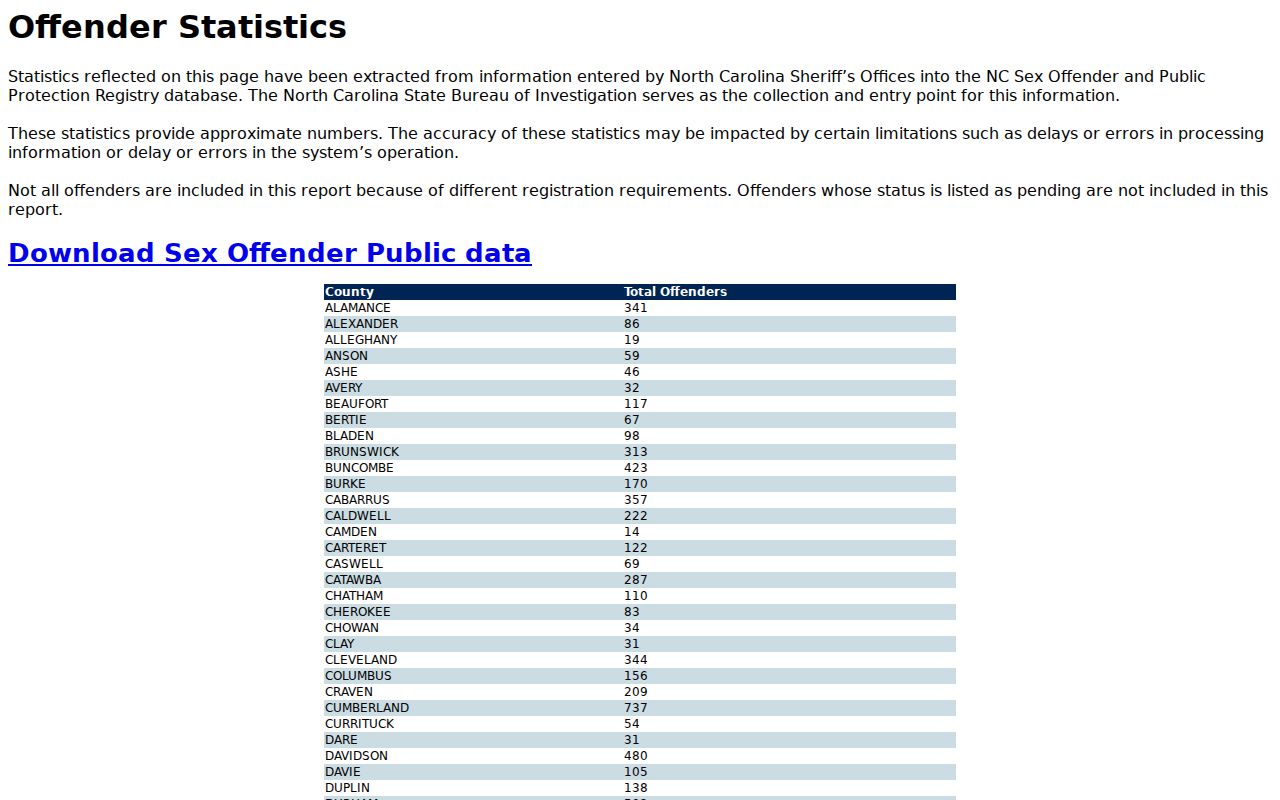
Those cautions explain why a live Hoke County profile search is more useful for identity and location questions than an isolated county total.
Community Notification and Lawful Use
Use Hoke County registry records for personal, family, and community awareness. Confirm identity, respect property, and report a specific suspected compliance issue to the sheriff. Do not confront a listed person or household. Threats, intimidation, trespass, and vigilantism can cause harm and bring criminal or civil consequences.
The NCSBI registry overview connects the state search, alerts, and notification resources.
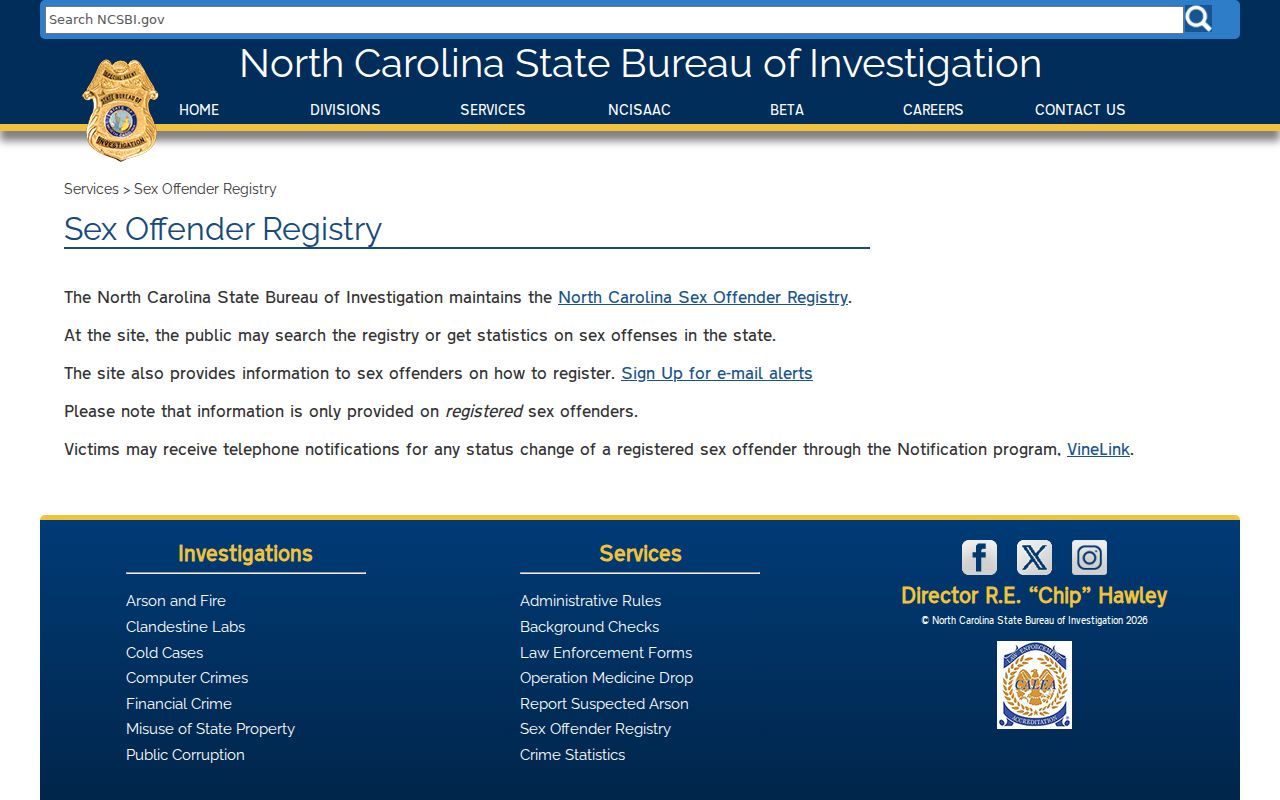
That official overview reinforces the registry’s public-safety role and directs users to the proper state tools.
Use registry data lawfully: Publication under Article 27A does not authorize harassment, threats, intimidation, trespass, or vigilantism. Misuse can violate North Carolina criminal law and create civil liability.
For a nonemergency local concern, call Hoke County Sheriff at 910-875-5111 and describe the exact profile fact that may be wrong. For an immediate threat, call 911.