
Checking Criminal History in Hoke County
No single Hoke County database contains every incident, arrest, court result, and period of supervision. Start with the North Carolina eCourts Portal for filed criminal cases. Use a courthouse terminal or the clerk when certification, an older file, or a paper document matters. A current jail question belongs with detention staff, while a statewide fingerprint-supported self-review belongs with the North Carolina State Bureau of Investigation. State prison and supervision records sit with the North Carolina Department of Adult Correction.
The official Hoke County government site is the county department starting point. Its captured page shows why local government contacts remain useful when a statewide portal does not answer a narrow Hoke County criminal-record question.
Use the department named on the original event rather than sending the same broad request to several offices.
- Gather the full legal name, likely spelling variants, approximate year, and date of birth when lawfully available.
- Search eCourts by name or case number, filter the location to Hoke County, and choose Criminal Actions.
- Compare the case number, events, charge entries, hearings, and disposition instead of relying on a name alone.
- Ask the clerk for the paper file or certification when online data is incomplete or identity remains uncertain.
- Use the sheriff, jail, SBI, or NCDAC only for the separate record each office maintains.
Why Hoke County Records Split
A deputy or police officer creates an incident and arrest report. Hoke County Detention Center staff create the booking entry. The magistrate and courts create criminal process, hearing, and judgment records. Fingerprint-supported arrest cycles may flow to NCSBI, and later prison or supervision data moves to NCDAC. These systems can describe the same event without holding the same facts.
A booking charge is the allegation delivered at intake. The prosecutor may file a different charge, and the clerk’s case file shows what was litigated. NCSBI can link a final disposition only when the arrest fingerprint and court outcome reach the central file correctly. A local report without an arrest may never become a rap-sheet entry. That split explains why one empty search is not proof that every other Hoke County record channel is empty.
| Question | Best first source | What it does not prove |
|---|---|---|
| Was a criminal case filed? | eCourts or Hoke Clerk | Current custody |
| Is the person held now? | Hoke Detention Center | Final guilt or sentence |
| What did an officer report? | Arresting agency | Court disposition |
| What is on my statewide fingerprint file? | NCSBI Right to Review | Every nonfingerprinted event |
North Carolina Official Background Checks
North Carolina does not offer a general public SBI name-search portal. For one’s own statewide record, NCSBI provides a mail-based Right to Review. It uses a complete fingerprint card and covers North Carolina fingerprint-supported arrests with linked dispositions when available. It does not include a full national or other-state history. Hoke County residents should confirm local fingerprint-card service and any rolling fee with the sheriff or Raeford Police before visiting.
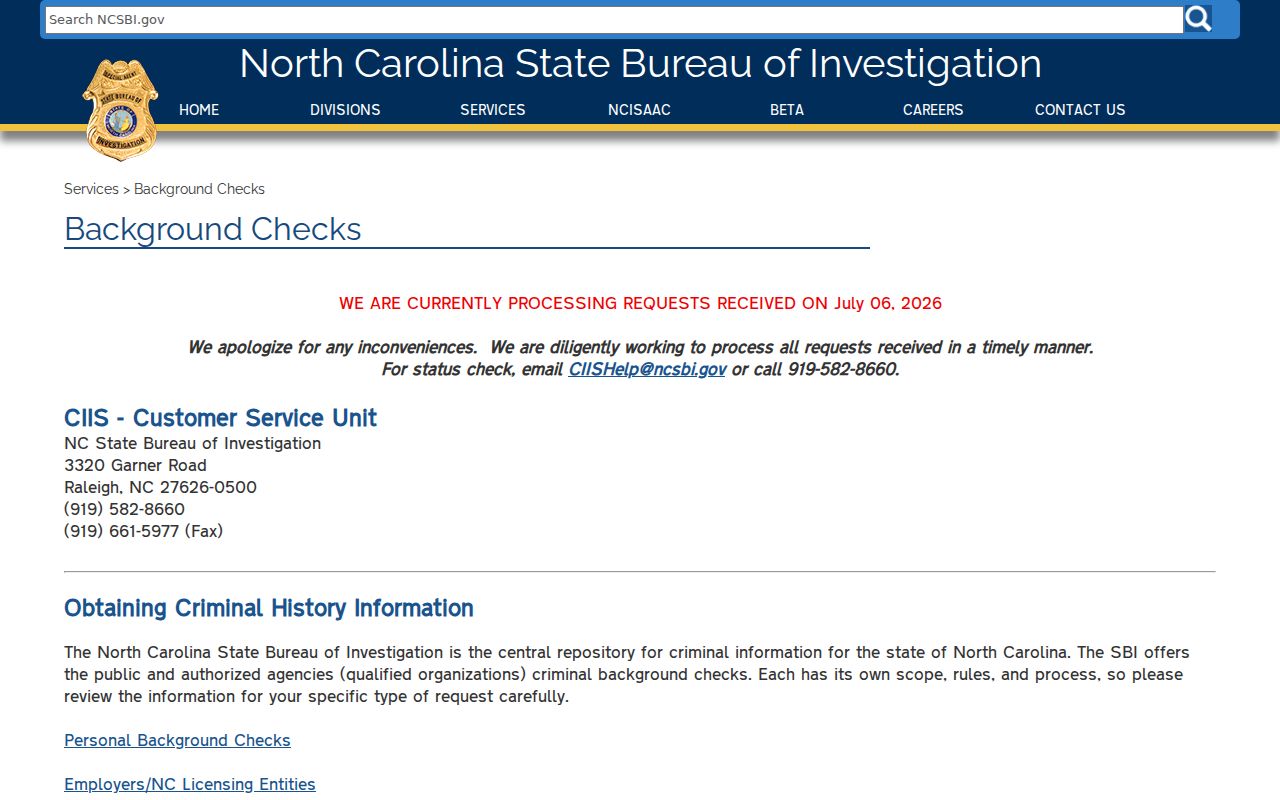
The NCSBI background-check overview identifies CIIS as the central repository and distinguishes its official products. The image captures the state agency route that should be used for a subject’s own fingerprint record rather than treating a public case portal as a formal background check.
For a certified Hoke-only name search, submit form AOC-CR-314 to the Clerk of Superior Court. Free courthouse terminals can search noncertified court data, but certification is a separate service.
| Official route | Scope | Published charge |
|---|---|---|
| Hoke Clerk certified search | Hoke County court records | $25 |
| Courthouse public terminal | Noncertified court search | Free viewing; print fee may apply |
| NCSBI Right to Review | Own North Carolina fingerprint file | $14 |
| FBI Identity History Summary | Own national fingerprint file | $18 |
Hoke County eCourts Case Search
Hoke County joined Enterprise Justice in October 2024, and all North Carolina counties now use the system. The public Portal’s Smart Search accepts a party name or case number. Advanced Filtering can narrow results to Hoke County, Criminal Actions, case status, filing dates, and case type. Public results may show assignments, parties, case events, hearings, dispositions, and financial information. Dates of birth appear masked, so common-name matches still need care.
The official North Carolina eCourts entry page connects users with statewide court services. Its captured view marks the right public source for Hoke County case information.
Smart Search wildcard rules are strict. A case-number wildcard needs at least four characters before the asterisk. A name wildcard needs at least three last-name characters and one first-name character before their asterisks. If Portal fails, the Hoke courthouse terminal can search by defendant, case number, victim, or witness.
| Field | Useful Hoke setting | Purpose |
|---|---|---|
| Smart Search | Name or known case number | Starts the result set |
| Location | Hoke County | Removes other county matches |
| Category | Criminal Actions | Excludes civil and estate cases |
| DOB From/To | Same exact date | Validates a returned party while display stays masked |
| Filing date | Approximate year range | Narrows large result lists |
Criminal Record Types
Hoke County criminal records begin at different points. An incident report can exist without an arrest. An arrest report explains the custody action and alleged offense. The jail’s booking record logs intake, charges, and release conditions. A court file follows the prosecution through hearings and disposition, while an SBI rap sheet groups fingerprint-supported arrest cycles and linked results.
- Incident and arrest reports: held by Hoke Sheriff, Raeford Police, or the other agency that investigated.
- Booking records: held by Hoke County Detention Center for current county custody.
- Criminal case files: kept by the Hoke Clerk for District and Superior Court matters.
- State repository records: maintained by NCSBI and available to the subject through Right to Review.
- Corrections records: maintained by NCDAC for prison and state-run supervision history.
- Registry records: verified through the sheriff and published in the state sex offender registry.
The full Hoke County criminal court case search focuses on filed charges, events, and outcomes. Hoke County arrest lookup work instead follows agency and jail records without treating an allegation as guilt.
Hoke County Fingerprint Self-Review
NCSBI Right to Review requires its current application, a full legible set of ten fingerprints on an FD-258 card, and a $14 money order or certified check. The packet goes by mail to NCSBI CIIS in Raleigh. Cash, personal checks, credit cards, and business checks are not accepted. Results return through the mail, and SBI offers no walk-in or same-day option.
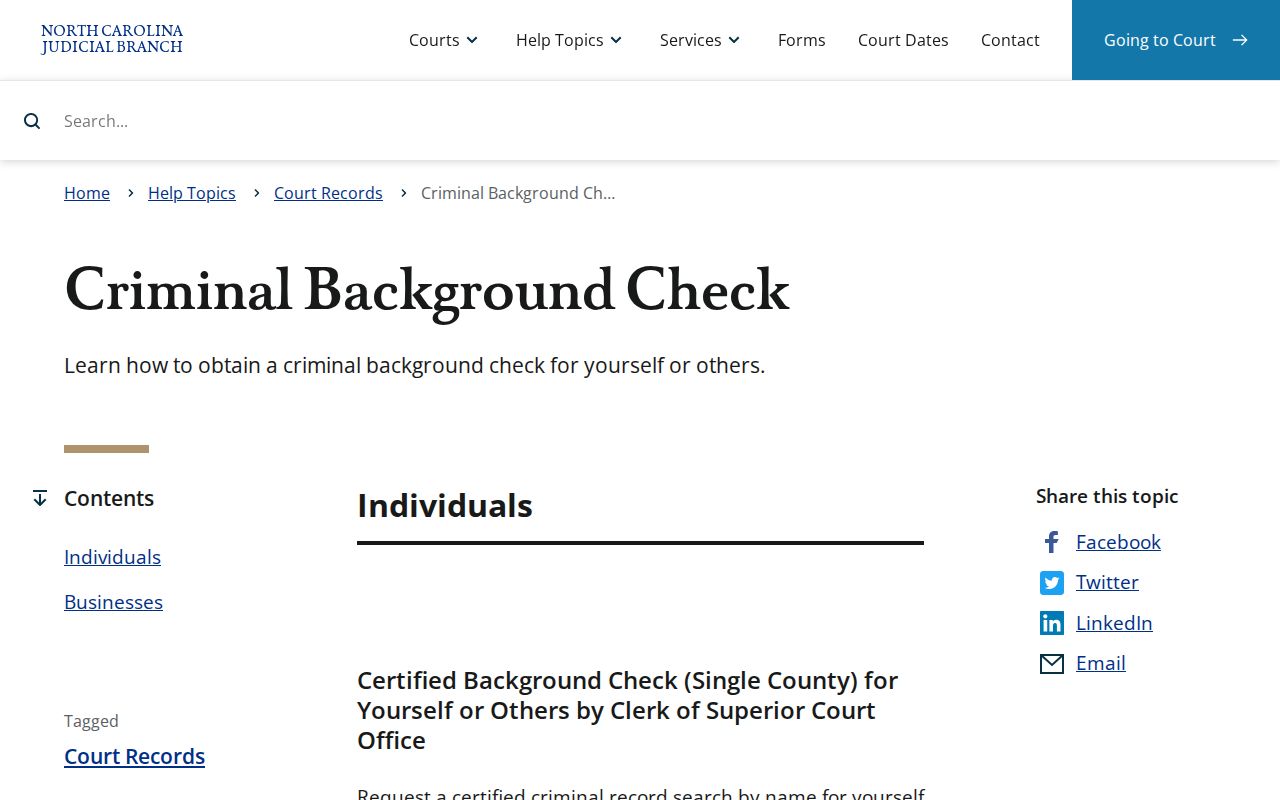
The official North Carolina criminal background-check page also explains the clerk-based options. Its captured guidance helps distinguish a $25 certified county search from free, noncertified terminal access.
To correct an SBI mismatch, obtain the Right to Review result first. A court-origin error may need the Hoke Clerk, while an arrest-card error may need the arresting agency. NCSBI’s written-exception form then gives CIIS a defined route to examine the challenged state entry.
Inside a Hoke County Criminal Record
The meaning of a Hoke County record depends on its custodian. An eCourts case summary can identify the court, case type, filing date, public parties, charge entries, hearings, events, disposition, and financial items. A Register of Actions may show that a warrant or summons was issued, served, reset, or recalled after it became public. It does not expose unreturned warrants, sealed matters, protected victim data, Social Security numbers, or ordinary juvenile files.
| Name and identity | Public party name and role; date of birth is masked in Portal. |
|---|---|
| Arrest and booking | Agency, date, alleged charge, intake, and release terms may be split across local files. |
| Charges | Offense entries and citations can change between arrest and prosecution. |
| Disposition | Dismissed, not guilty, guilty, or another recorded outcome must be read charge by charge. |
| Sentence | Judgment, costs, restitution, and supervision entries appear when public and entered. |
| Restrictions | Sealed, juvenile, protected, and unreturned-process data is withheld from ordinary public access. |
- Disposition
- The recorded outcome of a charge, not merely the current case status.
- Dismissed
- The prosecution ended that charge without a conviction.
- Prayer for judgment continued
- A distinct North Carolina result that should not be labeled casually as a dismissal.
- Register of Actions
- The dated procedural events recorded in a court case.
Hoke County Jail Record Calls
Hoke County publishes no official online jail roster, booking-number search, or public mugshot gallery. The honest current-custody route is a phone call to the Hoke County Detention Center at 910-875-5113 from 8 a.m. to 5 p.m., Monday through Saturday. Have the full legal name ready and, for a common name, a birth date or approximate booking date. The facility expressly offers charges and conditions-of-release information by phone.
Detention staff hold people and maintain booking data. They do not set bond, change court dates, decide guilt, or impose punishment. A magistrate or court sets release terms. For someone sentenced to state prison or supervised by the state, use the NCDAC Offender Public Information Search instead. The captured state locator shows the correct system for corrections data beyond Hoke County jail custody.
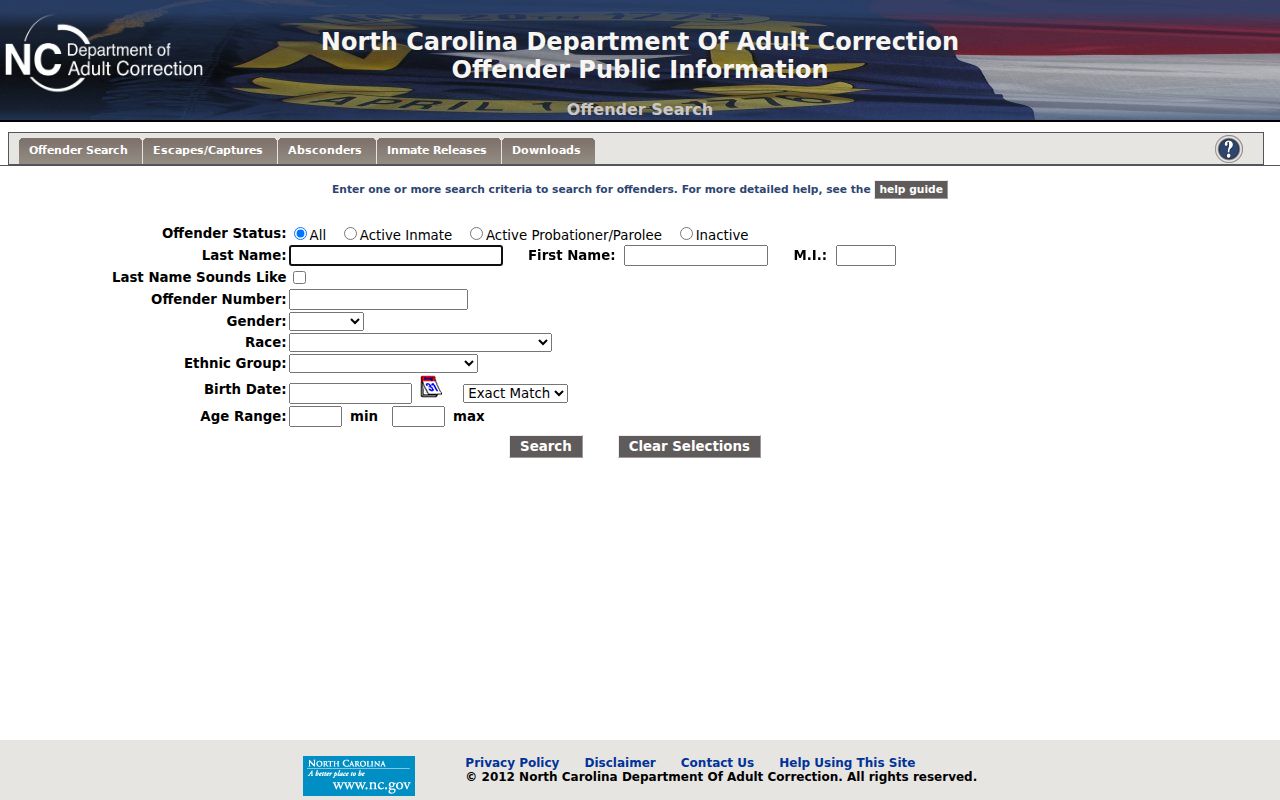
That database is not a live county booking log. Federal custody belongs in the Bureau of Prisons locator, creating a third separate channel.
Public Access Laws in North Carolina
North Carolina Public Records Law begins with broad public access, but criminal justice records have specific limits. G.S. 132-1.4 separates prescribed public incident and arrest facts from criminal-investigation and intelligence files. Court inspection rests on G.S. 7A-109. Law-enforcement recordings follow a special disclosure process under G.S. 132-1.4A rather than the same route as an ordinary report copy.
The General Assembly publishes the controlling text in Chapter 132 of the North Carolina General Statutes. The captured statute page anchors Hoke County record requests in the current state text.
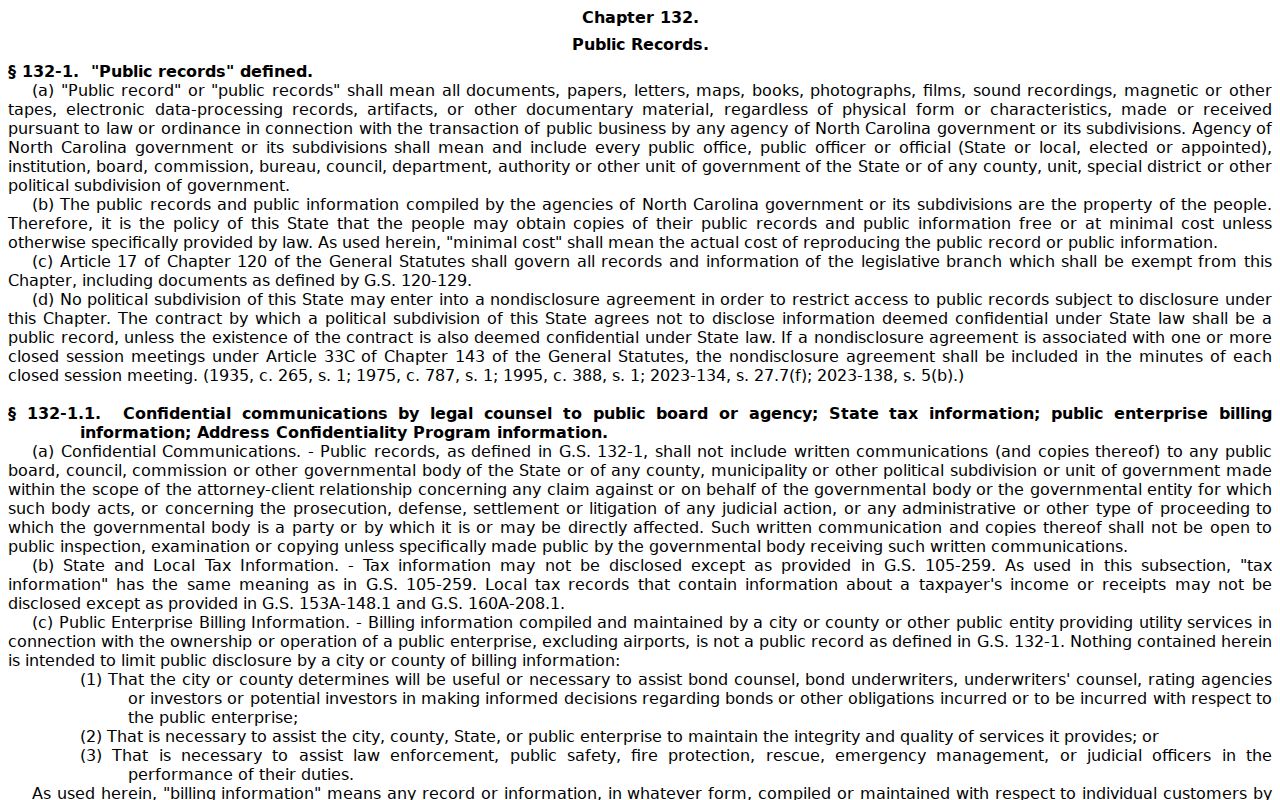
Specific criminal-record exceptions still control when they are narrower than the general inspection rule.
Key statutes:
G.S. Chapter 132 defines public records and the basic inspection and copy framework.
G.S. 132-1.4 controls public and restricted parts of criminal investigation records.
G.S. Chapter 15A governs criminal process, release, procedure, and expunction routes.
Article 27A controls sex offender registration and public registry fields.
A custodian may redact protected identifiers, confidential sources, investigative methods, victim information, and juvenile material. An office also need not create a record that does not exist. A narrow request for identified public information often works better than a demand for an entire investigative file.
Hoke County Warrant Record Limits
No official Hoke County active-warrant name search was found. eCourts may show returned public events, including process issued, served, reset to unserved, or recalled. Unreturned criminal warrants remain restricted from ordinary Portal access. A blank web result therefore cannot clear a possible warrant.
Call the Hoke County Sheriff at 910-875-5111 for law-enforcement warrant questions, the Clerk at 910-878-4100 for public case status, or magistrates at 910-878-4191 for proper procedural routing. A person who thinks a warrant exists should seek safe legal advice and current terms from the issuing court. Only the court or law enforcement can confirm that process has been cleared, and database updates may lag.
Note: An arrest warrant, an order for arrest, and a search warrant authorize different acts and should not be treated as interchangeable records.
Sealed, Expunged, and Restricted Records
North Carolina uses the term expunction for statutory removal of qualifying records. It is not a general pardon, and a dismissal alone does not mean every old booking or agency entry vanished. G.S. 15A-146 covers some dismissed and not-guilty outcomes. G.S. 15A-145.5 covers certain nonviolent convictions but excludes many offense classes and categories. The correct route depends on the outcome, offense, date, and number of convictions.
A Hoke County petition is filed in the court of conviction. The Clerk at 304 N. Main Street can identify current Judicial Branch forms but cannot give legal advice. Requirements may include affidavits, record checks, notice to the district attorney, and a filing fee unless an exemption or indigency rule applies. After an order, updates across the clerk, arresting agency, SBI, and other systems may take time. Check the court result first, then use SBI Right to Review to see whether the state file reflects the change.
Hoke County Incident Report Requests
Hoke Sheriff uses a direct Incident Report Request form rather than a separately branded records portal. The form asks for the requester’s name, phone, email, incident location, city, state, ZIP, signature, and any known date, victim, offender, or OCA number. The OCA number on the deputy’s case-status sheet is especially useful. Missing facts may keep staff from locating the report.
Submit the official sheriff incident request, call 910-875-5111, visit headquarters at 429 E. Central Avenue, or mail the sheriff at PO Box 300, Raeford, NC 28376. No public fee table, records email, or promised turnaround was found, so confirm those points with staff. A Raeford Police incident belongs with city police, while the court disposition belongs with the clerk.
Hoke County Sheriff
429 E. Central Ave., Raeford, NC 28376
910-875-5111
Monday through Friday, 8 a.m. to 5 p.m.
Hoke County Clerk
304 N. Main St., Raeford, NC 28376
910-878-4100
Monday through Friday, 8:30 a.m. to 5 p.m.
Hoke Detention Center
125 E. Edinborough Ave., Raeford, NC 28376
910-875-5113
Inmate information Monday through Saturday, 8 a.m. to 5 p.m.
Hoke County Record Growth and Routing
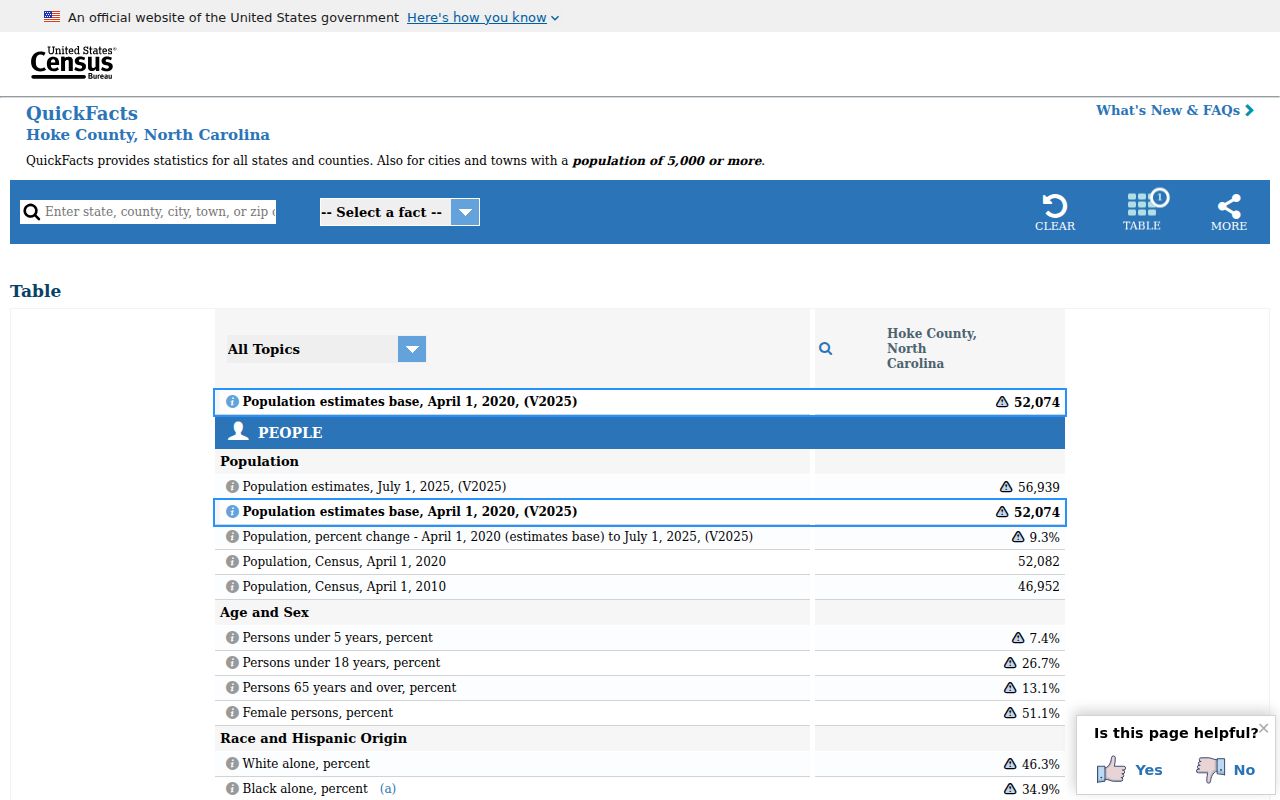
Hoke County grew from 52,082 residents in 2020 to an estimated 56,939 in 2025. Yet Raeford is its sole incorporated city and had an official 2024 estimate of 4,738. Most residents live beyond the city’s corporate limits even when a mailing address says Raeford. That makes agency matching vital: the place name on an envelope does not decide whether Raeford Police or Hoke Sheriff holds an incident report.
The official Census QuickFacts profile for Hoke County supplies the county population context. Its captured figures help explain why one courthouse, one county detention center, and a largely countywide sheriff system carry substantial records demand.
Four sheriff substations extend report access toward Westgate, Rockfish, South Hoke, and Pinehill. Westgate is specifically meant to reduce response time in a high-call-volume area and can take reports and resident concerns. Those substations are report points, not independent criminal-history databases or clerk offices.
Hoke County Criminal Records by City
Raeford is Hoke County’s only qualifying incorporated municipality. City police keep Raeford incident and arrest reports, but city arrestees are booked at the county detention center and criminal cases proceed in Hoke District or Superior Court. There is no separate Raeford municipal criminal court. A postal address outside city limits may still route the report to the sheriff, so start with the investigating agency.
Raeford Criminal Records
4,738 residents in the 2024 state estimate. Police reports start with Raeford Police; booking and court records move through Hoke County offices.